Quality and Innovation

exploring quality, productivity & innovation in socio-technical systems

Posts Tagged ‘management

Disorganization and Changing Your Mind are Both Expensive

with 4 comments

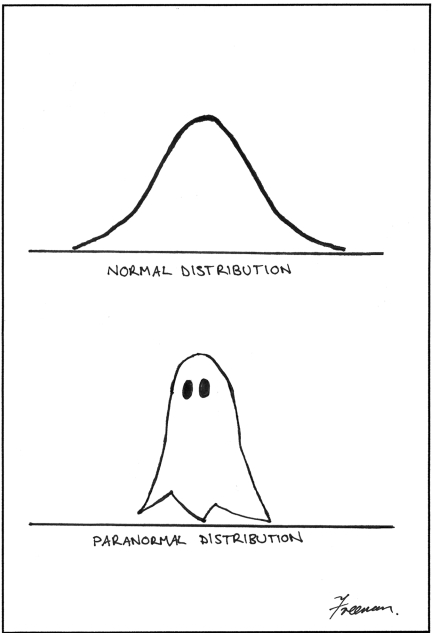
NOISERon DuPlain forwarded me an interesting post from November 2008 (via @duanegran, I believe) called How much do websites cost? It’s a great comprehensive overview of the different kinds of web sites that can be built – the spectrum of customization, interactivity, and intent that dictate whether a web site will cost $200 or $2 million. But what really struck me about this article was one tiny little section that talks about value, emphasizing the relationship between quality, waste, and the changeability of human wants, needs, and desires:

2.) A small company site that has 5 to 10 pages describing the products/services offered by the company. $500 to $2,000 depending on how prepared you are, and also on how clear in your own head you are about what you want. Disorganization and changing your mind are both expensive.

Disorganization is expensive because it blocks action. When your house is disorganized, you waste time and energy trying to find stuff. When the processes you use in the workplace are disorganized, time and physical energy can be wasted engaging in non-value-adding activities, and mental and emotional time and energy wasted in unproductive communications. Wasting time and energy can generate short-term real costs (for example, moving parts or products around a factory or supply chain can delay time-to-market while costing more in fuel for transport), long-term real costs (e.g. reinforcing negative behaviors that lead to breakdowns in interpersonal relationships, teamwork, or morale) or opportunity costs.

Changing your mind is expensive for the same reason: it either blocks new action from taking place, or it eliminates the value that could have been added by prior work. A task is not actionable unless you have the 1) resources to do the job, 2) the information and interest to complete it, 3) the skills and capabilities to make it happen, as well as a clear idea of what needs to be done, and 4) an execution environment that supports getting things done. Changing your mind can erode #2 or #3.

To reduce the risk associated with development, and to control the costs of the project, find out:

  • How much do you really know about what you want?
  • What essential elements are you pretty sure you’ll still want or need in 3 months, 6 months, 1 year, 5 years?
  • What parts do you have the resources, information/interest, capabilities/skills/clarity, and execution environment to get done now? (I call this RICE to make it easier to remember)

The lesson: to get higher quality and lower costs (that is, greater value), focus on those parts of a project that are least likely to change and do those first. This is, of course, if you have the luxury to be agile (highly regulated environments may impose restrictions or limits). Then stop – figure out what your experience working on those parts tells you about how you can approach the problem more systematically and effectively- and repeat the cycle until you iterate to the desired solution. This is the essence of applying organizational learning to your day to day tasks.

Written by Nicole Radziwill

August 5, 2009 at 4:25 pm

Quality vs. Excellence

with one comment

diamondI was reading through a company’s strategic plan over the weekend and noticed that they had made the decision to shift from a “quality focus” to an “excellence focus” recently. This made me wonder what the difference is, and why a company might want to make such a change in its strategy. Here’s my line of thought.

According to ISO 8402, quality is the “totality of characteristics of an entity that bear upon its ability to satisfy stated and implied needs.” That suggests that in a quality-driven environment, an organization will work to improve the characteristics of its processes, products, and people in order to eventually satisfy the stated an implied needs of its stakeholders (presumably customer, the workforce, and even society if social responsibility is a priority.)

When I searched for the phrase “what is excellence” one of the search results presented this story (the post is copied in full here):

A German once visited a temple under construction where he saw a sculptor making an idol of God. Suddenly he noticed a similar idol lying nearby. Surprised, he asked the sculptor, “Do you need two statues of the same idol?” “No,” said the sculptor without looking up, “We need only one, but the first one got damaged at the last stage.” The gentleman examined the idol and found no apparent damage. “Where is the damage?” he asked. “There is a scratch on the nose of the idol.” said the sculptor, still busy with his work. “Where are you going to install the idol?”

The sculptor replied that it would be installed on a pillar twenty feet high. “If the idol is that far, who is going to know that there is a scratch on the nose?” the gentleman asked. The sculptor stopped his work, looked up at the gentleman, smiled and said, “I will know it.”

The desire to excel is exclusive of the fact whether someone else appreciates it or not. “Excellence” is a drive from inside, not outside. Excellence is not for someone else to notice but for your own satisfaction and efficiency…

(I note that these ideas are reiterated by other bloggers as well, e.g. in http://how2bgenius.blogspot.com/2007/12/what-is-excellence.html.)

What I take away from this is that quality is driven from the outside (fueled by the needs of customers and other stakeholders) whereas excellence emerges from within an individual. A company that changes its strategy from a quality focus to an excellence focus must, as a result, have mastered the dynamics of being driven externally – and recognizes that additional process improvement requires turning inward.
With that said, why can’t we just craft organizational strategies that focus on both quality and excellence? I think many organizations actually do take this approach. My point here is that quality and excellence are different, and should not be treated as one and the same, but as a dynamic duo that can catalyze and organization to quality consciousness.

Written by Nicole Radziwill

June 22, 2009 at 2:53 pm

Not Invented Here

with 4 comments

peacockIf you are part of the software development world, no doubt you are familiar with “not invented here” (NIH) syndrome. It is the scourge of the software development culture, the unfortunate tendency within a group of software-minded people to attribute value to the code that members of the group or the group itself has written, while devaluing code, modules or COTS packages that have not been written by members of the group.

“Not invented here” is so prominent that it has a wikipedia entry, with text that assures us that this tendency is indeed a facet of many a social, corporate or institutional culture. Bloggers and even Harvard Business Review have touted its benefits, suggesting that this characteristic of a culture may catalyze innovation.

Today, I attended a meeting where I had an even bigger revelation about NIH. About 10 people attended, and we talked about how to search a large archive of metadata across multiple data sources. Attendees spoke of the problem as something that really needs to be done, as something that our organization really needs to spend time on – and we need resources to do it. There’s only one problem with this picture – a couple of people within the organization have been working on this problem for the past 18 months, have produced a prototype that’s consistently getting about 100 hits a day (which is substantial given the problem domain), and have received positive reviews and helpful suggestions for moving forward from the user community. The releases have been published in inter-organizational emails, the company newsletter, and other venues where it would be very easy for everyone in this meeting to have learned of the new functionality and used it. But apparently no one has bothered to pay attention!

The moral of the story: when a NIH culture is observed, perhaps the resources and opportunities that are available to a group or an organization that could use them are truly invisible to the people who need them. The people can not see the opportunities because they are not looking; they are not paying attention.

Is paying attention to opportunities a value within your software development organization? It requires conscious effort.

Written by Nicole Radziwill

June 19, 2009 at 12:52 am

New Quality Manager for Obama: Zients replaces Killefer

leave a comment »

obama-headIn his weekly radio address, President Obama announced today a renewed intent to cut wasteful spending, and the upcoming announcement of even more decisive cuts. He also noted the appointment of Jeffrey Zients, a former executive and Director of Sirius XM, as the Obama Administration’s Chief Performance Officer. His official title will be deputy director for management of the Office of Management and Budget. Zients replaces Nancy Killefer, who rescinded her nomination in March.

There have been criticisms of Obama’s handling of the budget so far. For example, critics bristle at the thought that Obama approved the fiscal year 2009 budget with earmarks (this is covered in an article by George Stephanopoulos on March 1, “Obama Will Sign Omnibus Despite Earmark Pledge”). But the fiscal year 2009 budget – executed in March 2009 – is retroactive. It is intended to cover operations of the government and all government-funded agencies (including research facilities, and university-driven research and development) from October 1, 2008 through September 30, 2009. Failure to pass that budget would have meant a swift and immediate crisis, catalyzing a domino effect of layoffs in the highly specialized industries. This could have a nontrivial and long-reaching impact on national competitiveness by depressing not only technological innovation, but also by cutting off practical opportunities for university students and researchers to contribute to innovation as they receive mentorship and training.

More about Zients from the White House Blog:

Zients has twenty years of business experience as a CEO, management consultant and entrepreneur with a deep understanding of business strategy, process reengineering and financial management. He served as CEO and Chairman of the Advisory Board Company and Chairman of the Corporate Executive Board. These firms are leading providers of performance benchmarks and best practices across a wide range of industries.  Currently, he is the Founder and Managing Partner of Portfolio Logic, an investment firm focused primarily on business and healthcare service companies.

Written by Nicole Radziwill

April 18, 2009 at 3:56 pm

Management Improvement Carnival #59

with one comment

I am pleased once again to host John Hunter’s Management Improvement Carnival, featuring some interesting or noteworthy articles that have been posted over the past couple weeks. Be sure to check out previous installations of the Carnival to get a broad sample of the most recent blog posts that are relevant to managers who are interested in quality, innovation and process improvement.

  • Small is the new big. Sustainable is the new growth. Trust is the new competitive advantage. All of the rules of business have changed, and the seismic shift is both electrifying and frightening. But there are opportunities to be embraced, and many of them are summed up in this HBS blog article entitled Why Small Companies Will Win in This Economy
  • There is a great post from March 8 by June Holley, talking about self-organizing to achieve systems-level innovation. She notes that because theory is lacking, this process might be protracted, but to get to the point of understanding theory we need some more “real life” examples and case studies of how we self-organize in our organizations well – and not so well.
  • Is environmentally friendly insulation higher or lower quality? Reflections on the Building Material Emissions Study discuss its outcomes. How we deal with the interplay of quality and social responsibility will become an even greater issue over the next several years as our ability to grow unbounded is checked against the availability of resources – check out this study to see what related studies might be on the horizon.
  • Sustainability 2.0 Doesn’t Add Up by Samuel Mann is an interesting read, reflecting on the notions of sustainability, social responsibility, psychology, and organizations. I’ve included it here for its broad coverage of some interesting topics and vignettes.
  • And did you know that neuroscience may provide some insights into how to stage your process improvement efforts and your initiatives that focus on innovation?
  • And don’t forget to try out Gmail Autopilot, the newly released utility that will help you autorespond in very meaningful ways to your mundane emails and even your money laundering spam from foreign countries. It’s a technology advancement so advanced it’s unbelievable!

Written by Nicole Radziwill

April 1, 2009 at 10:11 pm

The New Competitiveness

leave a comment »

AIG is falling. Bailouts are flying. All of the rules of business have changed, and the seismic shift is both electrifying and frightening. But there are opportunities to be embraced, and many of them are summed up in this article entitled “Why Small Companies Will Win in This Economy“. Here is my favorite part, a veritable mantra for the 2010′s:

Small is the new big. Sustainable is the new growth. Trust is the new competitive advantage.

Thanks to Betsey Merkel (Twitter: @betseymerkel) who initially Tweeted this. And thanks to Valdis Krebs (Twitter: @valdiskrebs) without whom I wouldn’t have seen Betsey’s insightful retweets and started following her too.

Written by Nicole Radziwill

March 27, 2009 at 12:02 am

The Quality and Innovation Attitude

with one comment

ryan-headRyan Adams (@RyanSAdams; Blog) tweeted about another blog post this morning entitled “Looking for Yes” by Seth Godin. Ryan suggested that perhaps this is the reason, as described by Godin, that Obama got elected:

I don’t think it should matter whether or not you’re trying to make a profit. If you’re out to provide a service, or organized to deliver a product, then look for a yes. At every interaction.

Salesmen know to look for a small yes, and then pursue it aggressively to get a big yes. Kids know that to get a yes from a parent, a good strategy can be to find a similar situation that will get a yes, and then to make the comparison. Kids and salesmen want that yes to happen, so they’re willing to work on it – and think about what they want from as many different angles as it will take to win over the other party! This is the ultimate mode of “thinking out of the box” because it is so genuinely motivated by a person’s desire to accomplish something. So why is it so easy to revert to an objectionist attitude, particularly in the workplace?

I hear these kinds of phrases daily: “That will never work.” “It’s too complicated.” “People don’t want that.” “It can’t be done.” “It works the way we do it now, so why change it?” How will you know it doesn’t work unless you try? The naysayers may be right – that something can’t be done – but they’re missing the underlying dynamic. It can’t be done under the same assumptions that we’re using today. You have to change your assumptions to see new ways of doing things. You have to explore your rationale for doing those things in the first place.

Prahalad’s Fortune at the Bottom of the Pyramid presents some striking stories of finding innovation by applying this attitude. I strongly encourage everyone to read his Strategy+Business article from 2002. The intro the the article is revealing, and hopefully enough to get you interested in how this “looking for yes” attitude can help you in your work:

Low-income markets present a prodigious opportunity for the world’s wealthiest companies – to seek their fortunes and bring prosperity to the aspiring poor.

This vision requires challenging deeply rooted assumptions in culture and in business, and aggressively seeking ways to make impossible product development cases work. “Looking for yes” is a productive attitude in general, and particularly if you are working on quality improvement or increasing innovation. Who finds opportunities? The people who have open minds, and either actively look for the opportunities, or are open to those opportunities coming their way. Who doesn’t find opportunities? Anyone who doesn’t look.

(Side note: now that my senses have been “turned on” to discrete event simulation, I’m seeing it all over the place – even in books on my own bookshelf. Why didn’t I ever notice that before?)

Written by Nicole Radziwill

March 2, 2009 at 6:10 pm